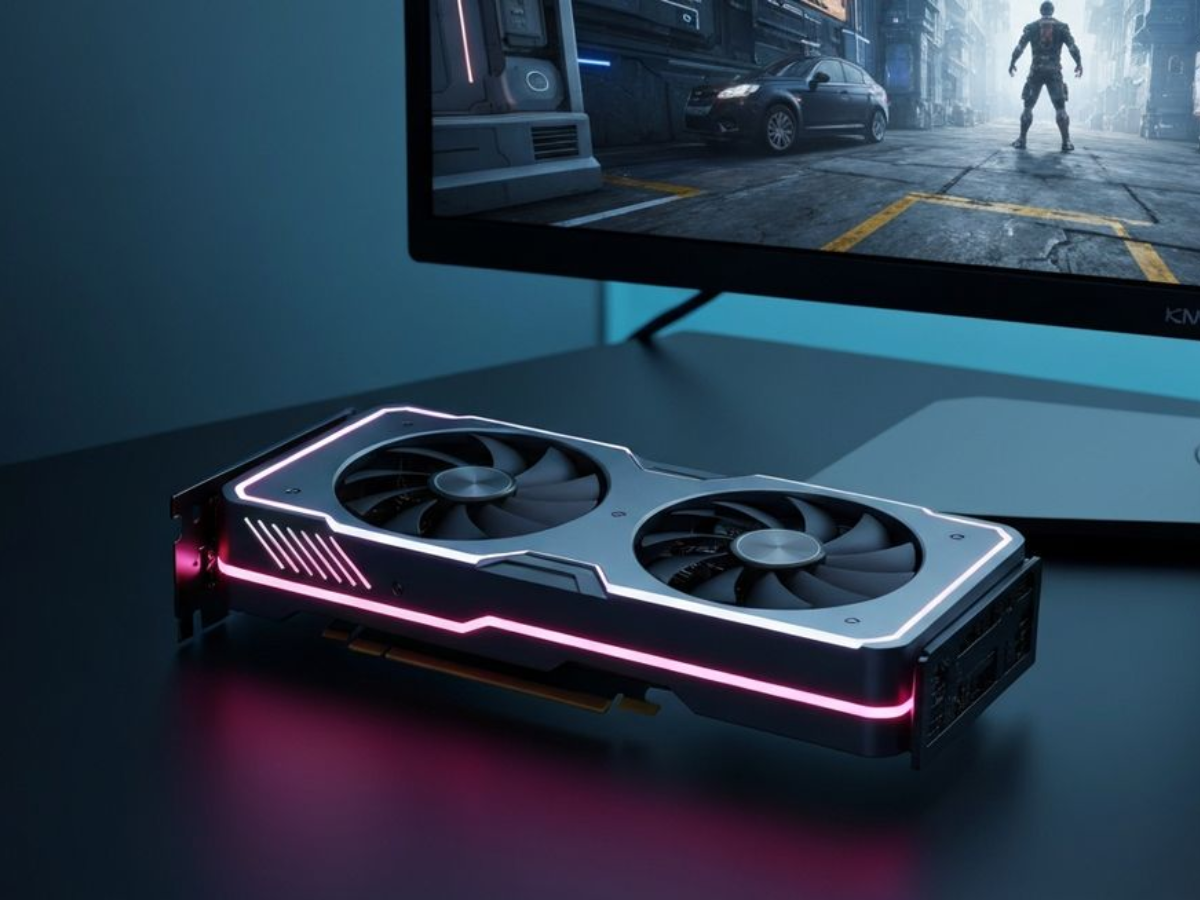
Natalie Vock is a graphics engineer working on Valve's Linux graphics stack and the RADV Vulkan driver team. Vock has created a series of kernel patches and user-space tools to improve VRAM prioritization on Linux. These updates ensure that foreground games have prioritized access to fast local GPU memory, while background applications are directed to slower system RAM.
Without this fix, Linux systems cannot reliably evaluate a fullscreen game as high priority as a browser tab or desktop process when VRAM is full. As memory pressure increases, game data can be moved to GTT (system RAM accessed via PCIe by the GPU). This slower access speed can cause stuttering and frame time increases, particularly common on 8GB graphics cards.
How the Linux VRAM Prioritization Fix Works
Vock's solution integrates two user-space tools, dmemcg-booster and plasma-foreground-booster, along with changes for DRM device memory cgroup support and TTM memory management in the Linux kernel. The first tool manages memory control, while the second allows KDE Plasma to detect the active fullscreen application and prioritize VRAM usage. Users not using KDE can achieve similar results with newer versions of Gamescope.
In Vock's tests with Cyberpunk 2077 on an 8GB GPU, the game initially used about 6GB of VRAM and was moved to 1.37GB GTT. After applying the patches, VRAM usage increased to nearly 7.4GB, and GTT movement dropped to 650MB, representing about a 53% reduction.
GPU Compatibility and How You Can Try the VRAM Fix Now
The patches target AMD's open Linux graphics stack. Reports indicate that some work has also improved Intel Xe GPUs, and for Nouveau, the open-source driver for Nvidia graphics cards, an upstream patch has been reported.
The simplest way to test the fix right now is to use CachyOS with KDE Plasma, where the necessary kernel updates have been integrated since version 7.0rc7-2. These patches have not yet been included in mainstream Linux distributions, and it has not yet been confirmed whether they will be accepted into the upstream kernel.









































Comments
(7 Comments)